

Fayetteville homeowners deal with electrical challenges that are shaped as much by history as by the Carolina climate. Many neighborhoods across Cumberland County feature homes built between the 1950s and 1980s — eras when electrical panels were sized for far fewer appliances than today’s households demand. Add in the area’s high humidity, summer heat that pushes cooling systems hard, and the occasional severe thunderstorm rolling in off the Coastal Plain, and you have a region where reliable electrical service isn’t a luxury — it’s a necessity.
Our licensed electricians serve Fayetteville and the surrounding communities with the kind of grounded, practical expertise this area calls for. Whether you’re in a post-war neighborhood near downtown, a newer development along the Outer Loop, or a sprawling property outside city limits, we bring the skills and equipment to get the job done right the first time.

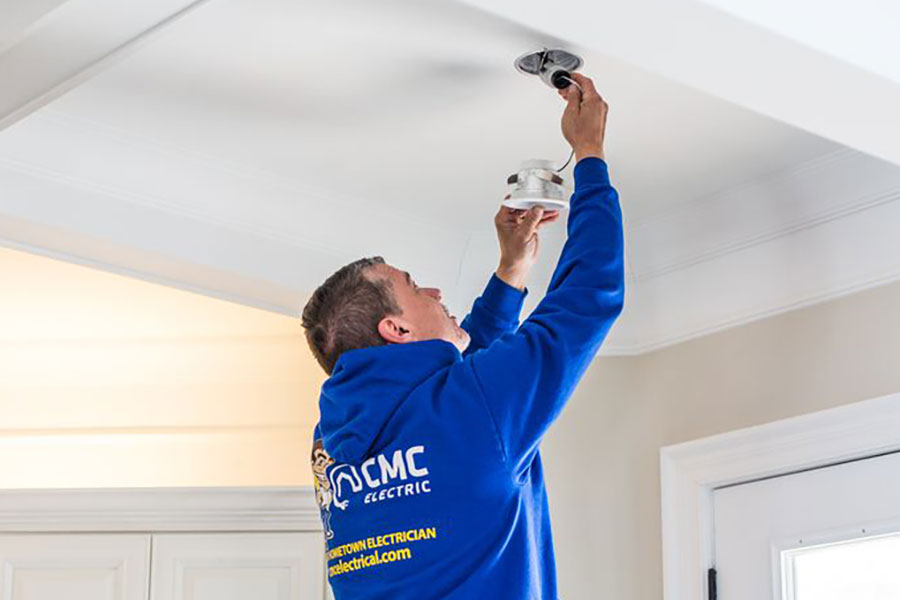
When something goes wrong with your home’s wiring, the symptoms aren’t always obvious. A breaker that trips when you run the microwave and the air conditioner at the same time, outlets that stopped working after a storm, or lights that flicker when the HVAC kicks on — these are all signs your system is telling you something. In Fayetteville’s older housing stock, wiring issues often trace back to original infrastructure that simply wasn’t built for today’s electrical loads.
Our repair and troubleshooting services are built around finding the root cause, not just resetting a breaker and hoping for the best. Common issues we resolve for Fayetteville homeowners include:
We diagnose the full picture so the fix holds up long-term, not just through the next storm season.
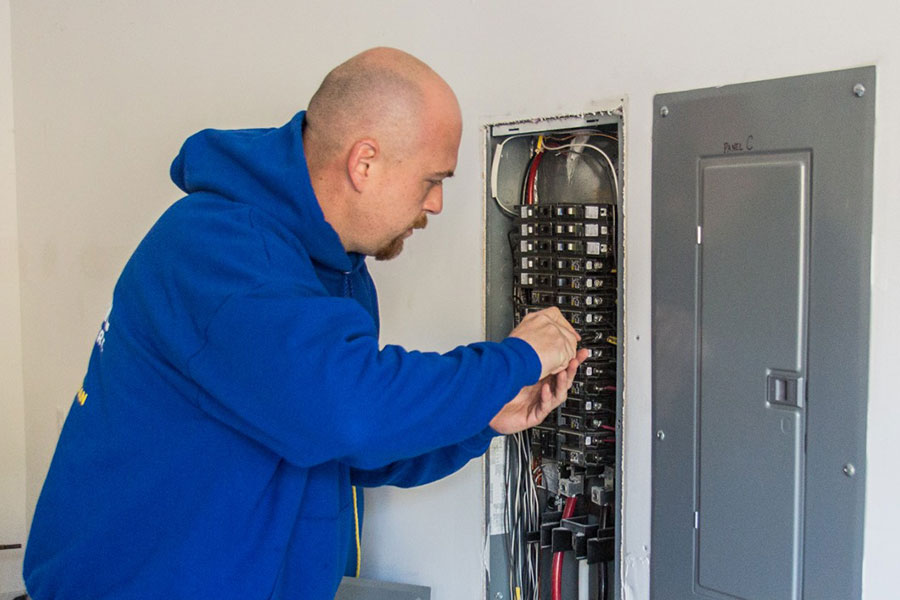
Upgrading a home’s electrical system in Fayetteville often starts with the panel. Older 100-amp services — common in homes built before the 1990s — struggle under the weight of modern heating and cooling equipment, EV chargers, home offices, and kitchen appliances. A panel upgrade to 200 amps or more isn’t just a convenience; it’s a safety improvement that brings your home in line with current North Carolina electrical code.
Beyond the panel, we install a wide range of electrical upgrades tailored to how Cumberland County homeowners actually live and work:
Every installation is permitted and inspected to Cumberland County code, giving you documentation that matters when it comes time to sell.
Fayetteville sits in a part of North Carolina where the flat Coastal Plain terrain means thunderstorms can build quickly and move fast, bringing lightning, high winds, and power surges that test every component of a home’s electrical system. Our full-service approach means you don’t need a different contractor for every type of job.
From the first inspection to final permit sign-off, we handle residential electrical work of all scopes — including safety inspections on homes that have changed hands, wiring for new room additions, generator transfer switch installation, exterior lighting for carports and detached garages, and smoke and carbon monoxide detector wiring. Homeowners near cross-streets like Raeford Road and Ramsey Street often find their homes have had multiple additions or updates over the decades, and tracking down how all that wiring connects can be complicated. We take the time to document and map what we find so you always know what you’re working with.
Marcus called us on a Tuesday morning after the breaker feeding his home office tripped for the third time in a week. He lives in Haymount, one of Fayetteville’s older established neighborhoods, in a brick ranch built in the early 1960s. The panel was original to the home — a 100-amp unit with breakers that hadn’t been touched in decades.
When our technician arrived, he did a full load calculation on the circuit. It turned out the home office circuit was also feeding a hallway bathroom and a bedroom, a common wiring arrangement from that era. Marcus had recently added a second monitor, a laser printer, and a space heater to his office, pushing the circuit well past its safe limit. We added a dedicated 20-amp circuit for the office and, while we had the panel open, identified two other breakers showing signs of heat stress. Marcus opted to replace those as well. The whole job was done same day, permitted with Cumberland County, and the panel hasn’t given him a problem since.

There’s no shortage of contractors in the Fayetteville area, but not all of them bring the same level of accountability to the job. We’re fully licensed and insured in North Carolina, and every technician on our team understands the specific demands this region puts on residential electrical systems — from the humidity that accelerates corrosion on connections to the thunderstorm seasons that can send power surges through aging wiring.
We pull permits, we schedule inspections, and we don’t cut corners on the work that keeps your family safe. Our trucks are stocked to handle most repairs in a single visit, and we communicate clearly throughout the process so you’re never left guessing. Fayetteville homeowners trust us because we show up when we say we will and stand behind every job we complete.
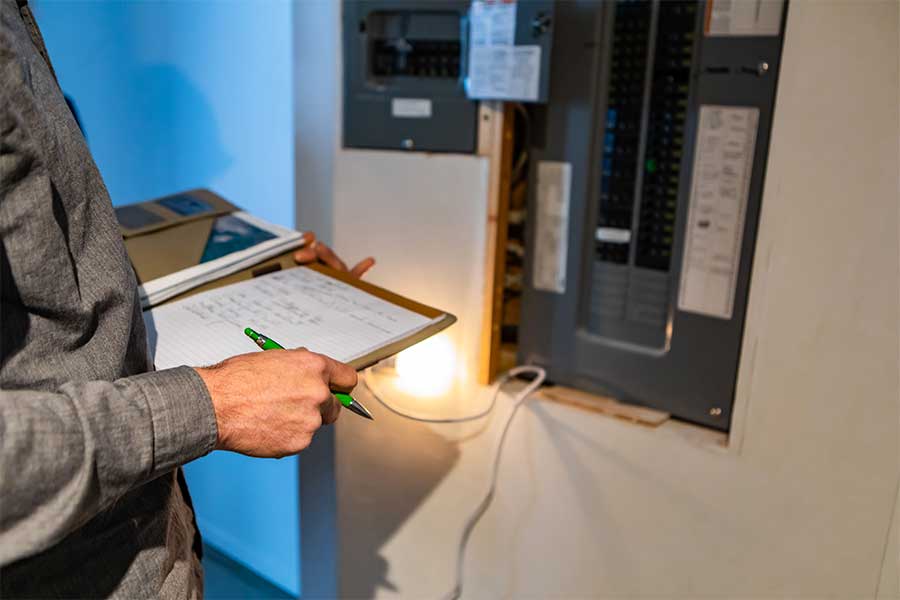
Common warning signs include breakers that trip frequently or won’t reset, a burning smell near the panel, visible signs of scorching or rust, a panel that feels warm to the touch, and lights that dim or flicker when large appliances cycle on. Older panels in homes built before the 1990s may also be undersized for today’s electrical loads. If you notice any of these, schedule an inspection with a licensed electrician before the problem becomes a safety hazard.
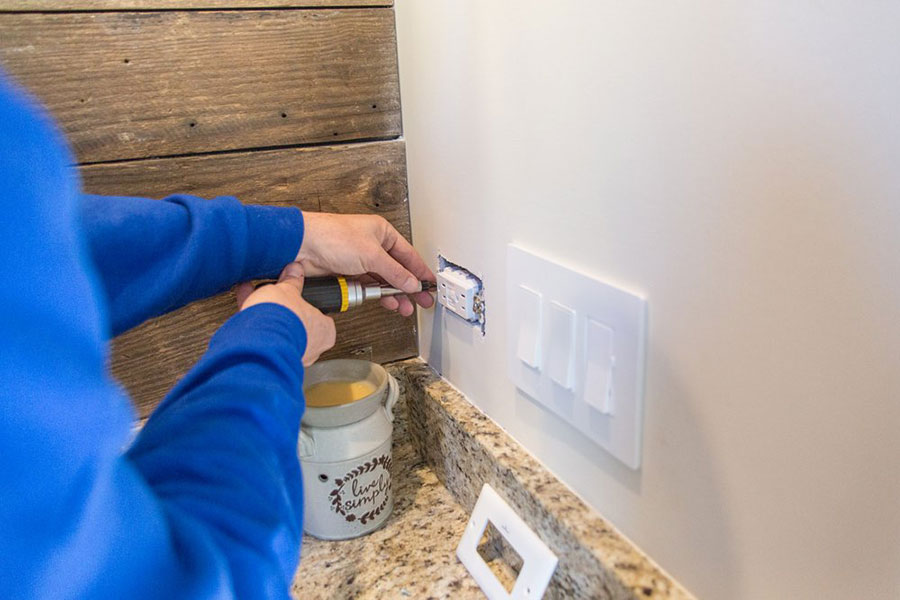
GFCI outlets are required by code in areas where water and electricity are in close proximity — bathrooms, kitchens, garages, outdoors, and unfinished basements. If your home was built before the mid-1970s, there’s a good chance these locations don’t have GFCI protection. You can identify a GFCI outlet by the test and reset buttons on its face. If your outlets in those areas don’t have those buttons and aren’t protected by a GFCI breaker, an electrician can evaluate and upgrade them to meet current safety standards.
Power strips and extension cords are intended for temporary use, not as permanent wiring solutions. Relying on them long-term — especially for high-draw appliances like space heaters, refrigerators, or air conditioners — can overload circuits and create a fire risk. If you find yourself consistently needing extra outlets in a room, the safer fix is having a licensed electrician add dedicated outlets or a new circuit rather than daisy-chaining strips.
If your neighbors have power and you don’t, the issue is likely inside your home rather than with the utility. Start by checking your main breaker — it may have tripped during a surge. If resetting it doesn’t restore power, or if it trips again immediately, there may be a more serious fault in your service entrance, meter base, or internal wiring. Do not attempt to investigate your meter base or service entrance yourself. Call a licensed electrician who can safely diagnose the issue and coordinate with your utility provider if needed.
Most residential panel upgrades in Fayetteville are completed within a single day. The timeline depends on the size of the upgrade, the condition of the existing wiring, and whether a utility disconnect is required. The process includes obtaining a permit from Cumberland County, completing the installation, and scheduling an inspection. Your electrician can give you a more specific timeframe after assessing your current panel and service configuration.