

Micro is one of Johnston County’s smaller communities, but small does not mean simple when it comes to residential electrical work. Homes here tend to reflect the agricultural and working-class roots of this part of the county — sturdy older structures on generous lots, many of which have been owner-maintained for decades. That kind of history often means electrical systems that have been added to, repaired informally, and stretched beyond their original design without anyone sitting down to reconcile the whole picture.
We serve Micro and the surrounding area with the same licensed, permitted approach we bring to every community in Johnston County. Small-town properties deserve the same quality of work as any suburban home, and we do not adjust our standards based on the size of the job or the zip code.

In a community like Micro, electrical problems in older homes often have long backstories. A breaker that started tripping last week may trace back to a wiring decision made during a kitchen update fifteen years ago. A bathroom outlet that stopped working after heavy spring rains may connect to a crawl space where the vapor barrier has never fully done its job. Getting to the bottom of these issues requires patience and a methodical approach rather than a quick part swap.
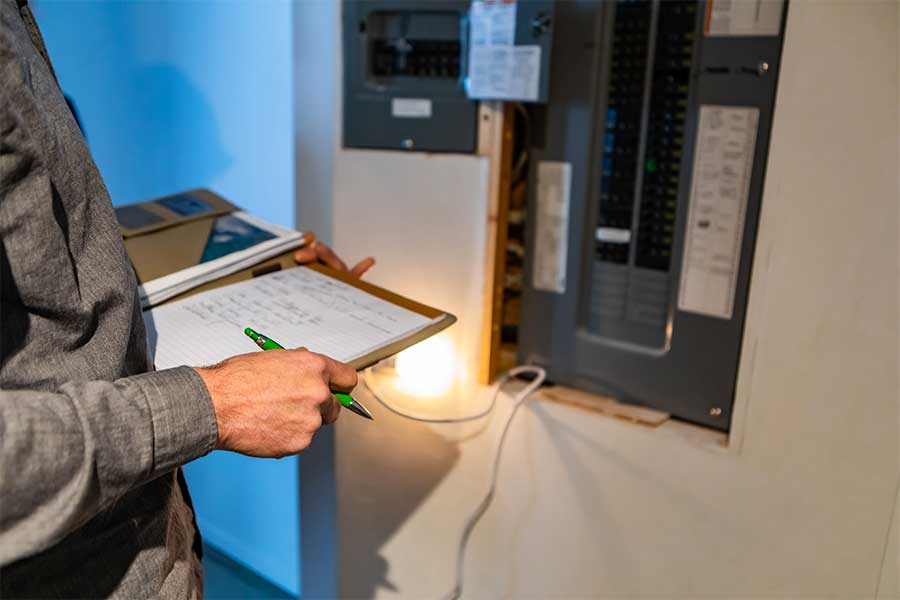
We work through the circuit from the panel outward, documenting what we find so you understand your system by the time we leave. Repair situations we encounter regularly in the Micro area include:
We diagnose the full picture and give you a clear, honest account of what needs to be done and in what order.
For homes in Micro that were built before central air conditioning was standard, the original electrical service was typically designed around lighting, a few appliances, and maybe a window unit or two. Those parameters are long gone for most households, and the panels that served them have been asked to do far more than they were built for. Upgrading to a 200-amp service is often the starting point for making a home in this area genuinely reliable and safe for modern use.
Beyond panel work, we handle installations that match how Johnston County homeowners actually use their properties:
Every installation is permitted and inspected to current North Carolina electrical code before we consider the job complete.
Rural properties in the Micro area share a characteristic that shapes the electrical work we do here more than anything else: distance from the utility infrastructure means that when storms knock power out, restoration can take longer than it would in a denser area. A derecho, tropical remnant, or ice storm that clips Johnston County can leave homes in smaller communities dark for days. That reality has made generator preparedness a core part of what homeowners here ask us for, and we are equipped to handle it properly.
Our full residential service scope in the Micro area covers safety evaluations for newly purchased older homes, smoke and carbon monoxide detector installation, rewiring of structures where the original wiring is at or past the end of its service life, yard and driveway lighting, and coordination with the utility on service entrance work that requires a meter pull. We treat every property in this community the same way we would want our own handled.
Gary called us after a section of his home went completely dark during a rainstorm — not a flicker, just a full loss of power to the back half of the house while the front half stayed on. The home was a 1970s ranch on a rural lot outside Micro that he had owned for about eight years.
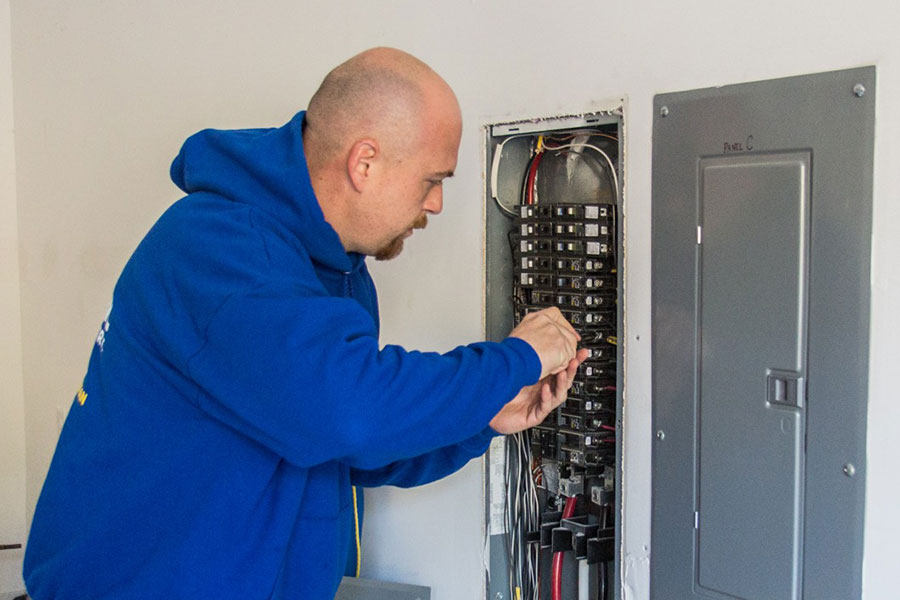
The panel told the story quickly. One of the two legs of the 240-volt service had lost its connection at the main lugs — a failure that cut power to half the circuits while leaving the others live. The lug itself had corroded at the point where the service entrance wire seated into it, a condition that develops gradually in older service entrances exposed to the humidity that settles into crawl spaces and utility areas in this part of the county. We replaced the corroded lug, inspected the full service entrance for additional corrosion, and tested every circuit before closing the panel. Gary had full power restored the same afternoon, and we documented the work for his records in case he ever decides to upgrade to a full 200-amp service down the road.

Homeowners in small Johnston County communities like Micro need a contractor who shows up, does the work correctly, and does not treat a smaller job as less important than a larger one. That is how we operate throughout this area.
We are fully licensed and insured in North Carolina, we pull permits on every applicable job, and we schedule the required inspections rather than leaving that step to the homeowner. Our technicians work transparently, explaining what they find and why a repair or upgrade is needed before any work begins. We serve Micro as part of our active Johnston County service area, which means we are not a one-time visitor — we are a contractor you can reach again if a question comes up after the job is closed.
Homes receive power through a 240-volt service that arrives as two 120-volt legs. If one leg loses its connection — at the utility transformer, at the service entrance, or at the main panel lugs — circuits connected to that leg go dead while circuits on the other leg remain live. This is different from a tripped breaker and requires inspection of the service entrance and main connections by a licensed electrician. Do not attempt to open or inspect your meter base yourself. Contact your utility to rule out an issue at the transformer, then have an electrician evaluate the service entrance and panel connections.
Wiring that runs through a damp crawl space is exposed to conditions that gradually break down insulation, corrode connections at junction boxes and outlet backs, and accelerate wear on wire nuts and terminal connections. In eastern North Carolina, where summer humidity is persistently high and crawl spaces in older homes often lack adequate vapor barriers, this kind of degradation is common. Signs include outlets that stop working after periods of wet weather, a burning smell near floor-level outlets, and breakers that trip more in wet seasons than dry ones. A licensed electrician can assess the wiring condition and recommend appropriate repairs or protective measures.
Aluminum branch circuit wiring was commonly installed in homes built between the mid-1960s and mid-1970s as a cost alternative to copper. It remains in service in many homes without incident, but it requires specific handling and connection devices rated for aluminum use. Problems arise when aluminum wiring is connected to outlets, switches, or fixtures rated for copper only, or when connections loosen over time due to aluminum’s expansion and contraction characteristics. A licensed electrician can inspect your home’s wiring, identify where aluminum-to-copper connections exist, and make the appropriate repairs or upgrades to bring those connections up to current safety standards.
A transfer switch is a device installed at your electrical panel that isolates your home’s circuits from the utility line before connecting power from a generator. Without one, running a generator and connecting it to your home through an extension cord or back-feeding through a dryer outlet sends power onto the utility line — a serious hazard for utility workers restoring power in your area and for your own equipment. A transfer switch, properly installed by a licensed electrician, creates a safe, code-compliant way to power selected circuits from a generator during an outage without any risk of backfeed.
Most residential panel replacements are completed in a single day. There will be a period during the job when your power is off — typically a few hours while the old panel is removed and the new one is wired and connected. Your electrician will coordinate with the utility on any work that requires pulling the meter. The total time without power varies based on the scope of the upgrade and how quickly the utility can respond for the meter disconnect and reconnect. Your electrician can give you a more specific estimate once the job is assessed.