

Princeton sits in the heart of Johnston County, a community where working farms, long-established neighborhoods, and generations of the same families under the same roofs are still the norm. That history shows up in the electrical systems of many local homes — panels installed when the house was first built in the 1950s or 1960s, wiring that has been extended and tapped over the decades, and outbuildings that got power long before anyone thought to pull a permit for it. These aren’t problem homes; they’re homes that have been lived in, and they need an electrician who respects that.
We serve Princeton and the surrounding Johnston County area with licensed electrical work that meets current North Carolina code while accounting for the realities of older rural and small-town residential properties. Whether your home is a farmhouse on the edge of town or a newer build near the US-70 corridor, we bring the same level of care to every job.

Princeton homes have a tendency to surface electrical problems that trace back not to one single failure but to a long accumulation of small decisions made over many years. A circuit that was fine when the house had one window unit air conditioner starts tripping now that there is a central system and a chest freezer on the same line. An outlet that worked last month goes dead after a wet spring pushes moisture under the crawl space sill. Getting to the real answer requires working back through that history, not just swapping the most obvious part.
We approach every troubleshooting call in Princeton with that kind of thoroughness. The issues we find most often in this area include:
We explain what we find in plain terms and give you a clear, prioritized path to fixing it.
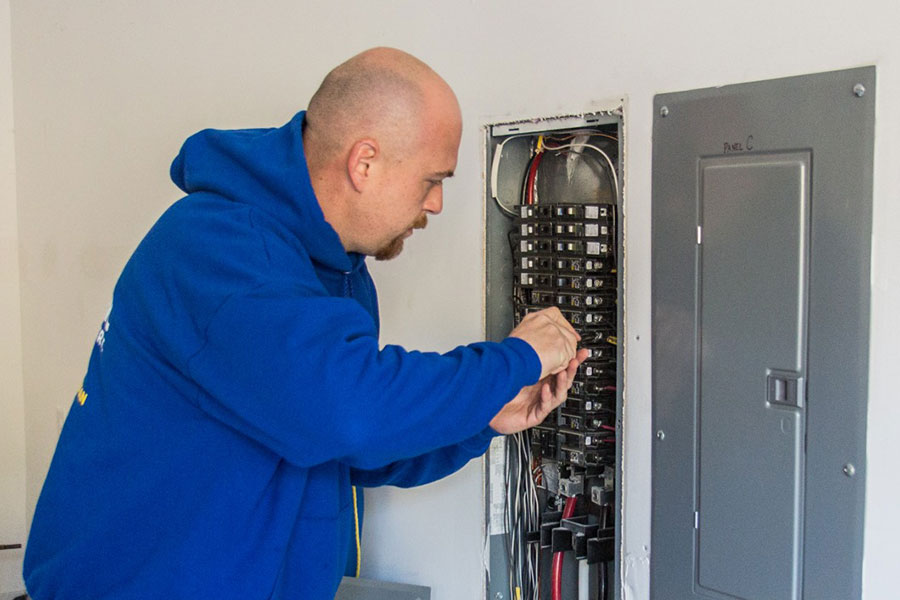
A 100-amp panel was reasonable for a Johnston County farmhouse in 1965. It is not reasonable for that same home today if the family has added central air, a heat pump, a chest freezer in the laundry room, and a home office. The math simply does not work out, and the result is a system that runs near its limit constantly — a condition that shortens the life of every component connected to it. A service upgrade to 200 amps is the most foundational improvement most older Princeton homes can receive.
We handle the full range of installation work for homes in the Princeton area:
All work is permitted through Johnston County and inspected before close-out.
Properties in and around Princeton often include more than just the main house. Detached garages, tobacco barns converted to storage, equipment sheds, and older outbuildings are common features of Johnston County lots, and each one that has electricity represents its own set of code and safety considerations. In many cases, the wiring connecting these structures to the main panel was run informally — direct burial wire without conduit, undersized feeders, or connections made inside junction boxes that were never sealed or properly located.
We bring the same licensed, permitted approach to outbuilding and accessory structure wiring that we bring to the main house. Beyond that, our full residential service scope covers safety evaluations for homes that have recently changed hands, smoke and carbon monoxide detector wiring, exterior and security lighting, and complete system rewires for older homes where the original infrastructure has reached the end of its reliable service life.
Beverly had lived in her Princeton home for over thirty years when she noticed that the lights in her back bedroom and the bathroom next to it would go out completely for a few seconds before coming back on. It happened a couple of times a week and had been getting more frequent over the past month.
When our technician arrived, he traced the circuit back to a junction box in the attic that had been used to splice in wiring for a room addition put on sometime in the 1980s. One of the wire nuts had corroded enough that the connection was making and breaking intermittently — what electricians call an arcing fault. The circuit was also undersized for the load it was carrying, since the addition had never been put on its own circuit. We replaced the junction box, made proper connections, and added a dedicated circuit for the addition to bring it in line with current code. Beverly mentioned the lights had been doing this on and off for years and she was relieved to finally have a real answer.

Princeton homeowners do not need a contractor who treats their home like a quick stop between bigger jobs. Older rural and small-town homes require attention, careful documentation, and the willingness to work through problems that do not always have a simple answer. That is the approach we take on every job we accept in this area.
We are fully licensed and insured in North Carolina, we pull permits on all work that requires them, and we do not walk away until the system has been tested and the work has passed inspection. We serve Princeton as part of a broader Johnston County service area, which means we are in this community regularly and accountable to it. When we finish a job at your home, we stand behind it.
A breaker that trips repeatedly is doing its job — it is detecting more current on the circuit than it is rated to handle. The cause could be too many devices running on a single circuit, a failing appliance drawing excessive power, a wiring fault such as a short circuit or ground fault, or a breaker that has weakened over time and can no longer hold its rated load reliably. Resetting a breaker without addressing the underlying cause is a temporary fix, not a solution. A licensed electrician can identify whether the issue is a load problem, a wiring fault, or a component that needs to be replaced.
Yes. In Johnston County and across North Carolina, wiring a detached structure that is separate from the main house requires a permit and inspection. This includes new wiring runs, feeder upgrades to existing outbuildings, and subpanel installations. Unpermitted outbuilding wiring is a common issue in older rural properties and can create both safety hazards and complications when selling the home. A licensed electrician handles the permit application and inspection scheduling as part of the project.
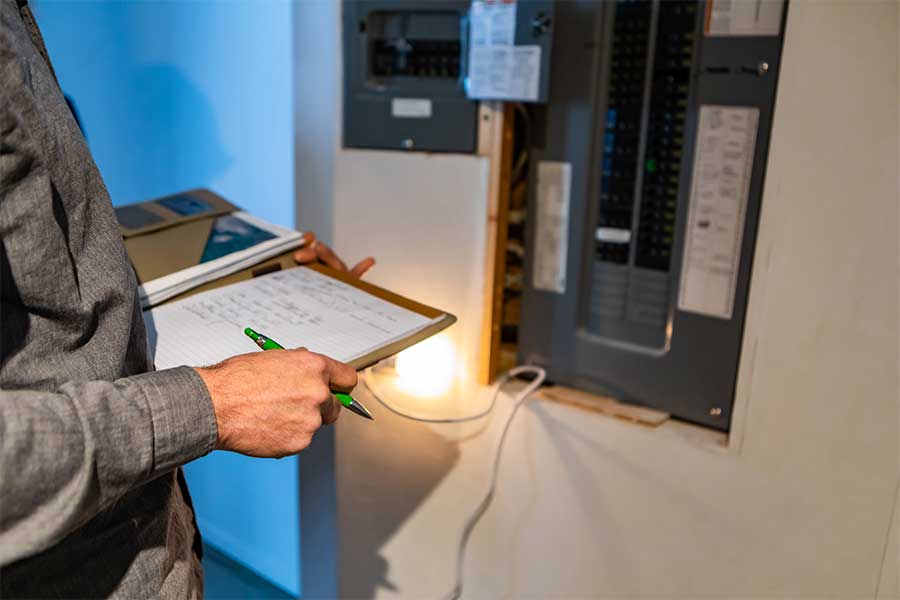
Age alone is not always a disqualifying factor for a panel, but panels over 30 to 40 years old are worth having inspected. Warning signs of a panel that needs replacement include breakers that feel loose, sticky, or will not stay reset; visible signs of scorching, rust, or melted plastic inside the panel; a panel that runs warm to the touch; and breakers that are rated for more current than the wire gauge they are protecting can safely handle. Certain older panel brands also have documented failure histories. A licensed electrician can assess your specific panel and give you an honest evaluation.
An arcing fault occurs when electricity jumps across a gap in a damaged or loose connection, generating intense heat at the point of failure. Unlike an overload, which a standard breaker is designed to catch, an arcing fault can burn for a period of time before generating enough heat to trip the breaker — long enough to ignite nearby materials. Arc fault circuit interrupter breakers, or AFCIs, are designed to detect arcing conditions and shut the circuit down quickly. They are required by current code in bedrooms and other living areas, and retrofitting older homes with AFCI protection is a meaningful safety upgrade.
A pre-purchase or post-purchase electrical inspection is one of the most practical steps a new homeowner can take. A licensed electrician will evaluate the panel, check the condition and type of wiring throughout the home, identify any unpermitted work or code violations, and give you a prioritized list of what should be addressed and when. This is especially useful in older Johnston County homes where ownership has changed multiple times and modifications may have been made without documentation. Going in with a clear picture allows you to plan improvements rather than react to surprises.